The 4 Cs model refers to a process for setting up and adjusting color reproduction equipment for the most accurate and consistent color, ensuring that each device performs at its best. The 4 Cs are depicted in a hierarchy where lower steps must be done first.
Cameras | Monitors | Proofers | Presses
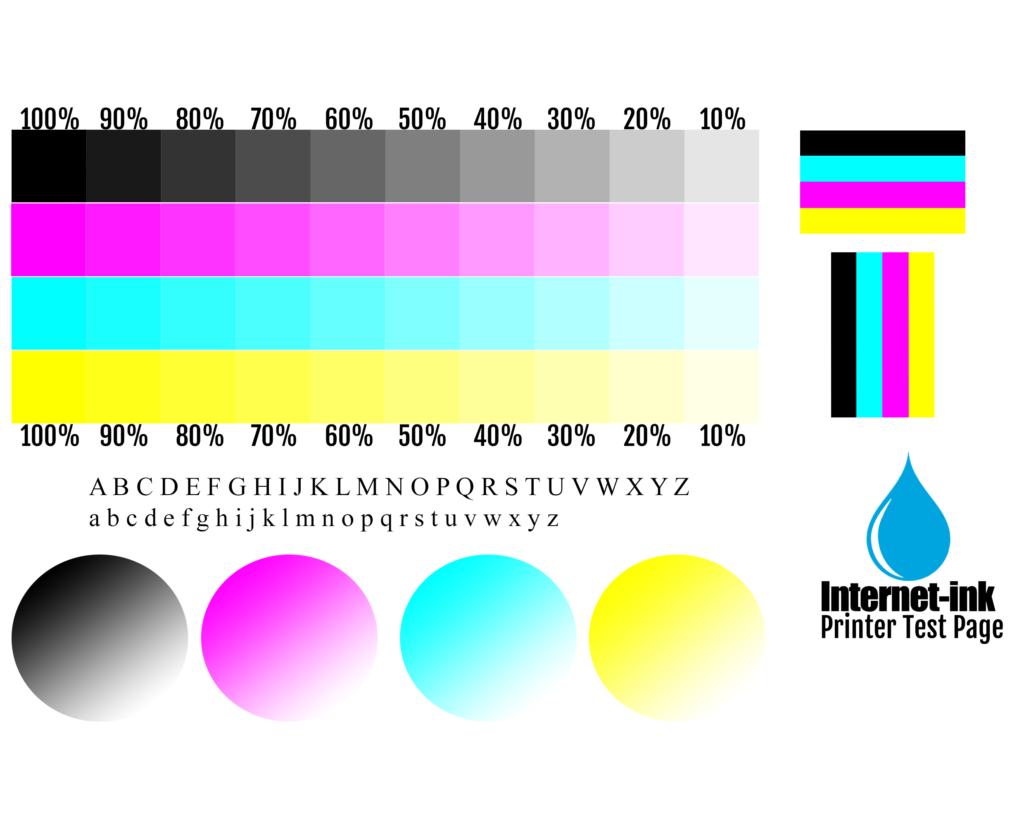
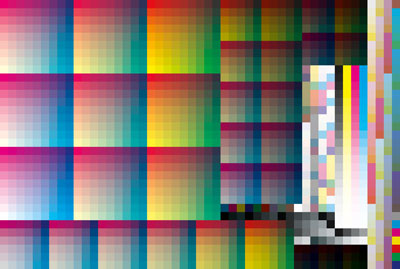
- Print an ink limits chart and set the ink limit as a percent. Inkjet printers "spit" droplets of ink onto the page, so it's easy to apply too much ink to the point that it puddles and runs off the page. The correct ink limit varies with the ink and substrate.
Consistency
- Print a tone scale of halftone dots, 0 to 100% in 5% or 10% increments, measure with a spectrophotometer set to dot area, and enter the readings into the calibration program, which is usually built into the raster image processor (RIP) or operating software.
Calibration
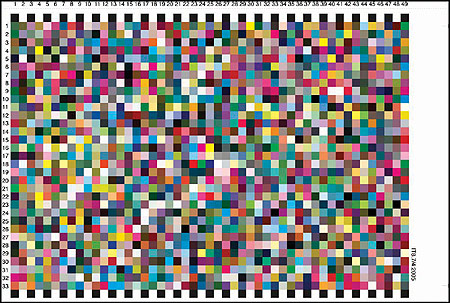
- Print a color management profiling target, such as the IT8.7/4, and measure with an automated spectrophotometer.
- Enter the color readings into the profiling program and create the ICC profile.
Characterization
- Select the proofer output profile in the RIP, or operating software.
- You may set a simulation profile, which is how you would like the prints to look (e.g., to look like lithographic printing).